

Scandinavian kids room ideas fun, safe & stylish. Create a Nordic children’s space that grows with them. Save this guide.
1. Start with a Neutral, Calming Base
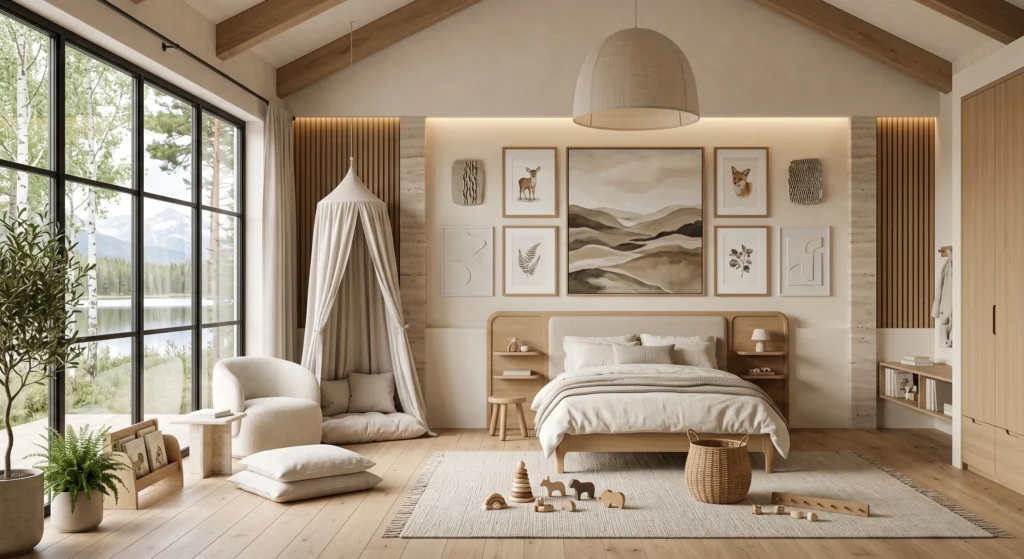
The foundation of any Scandinavian kids room is a soft, neutral backdrop. This creates a calm environment that supports rest and play.
- Walls: Warm white, soft beige, or light greige,nothing too stark or bright.
- Flooring: Light wood or a soft, neutral rug.
- Why it works: A neutral base is calming for children and versatile enough to grow with them.
A Nordic children’s room with a neutral base allows you to change accessories, bedding, and toys as your child grows,without repainting.
Tip: “A neutral base grows with your child. Swap accessories, not walls.”
You Might Like:9 Scandinavian Wallpaper Ideas to Transform Your Walls in 2026 (From Subtle to Statement)
2. Add a Pop of Color (Muted and Playful)
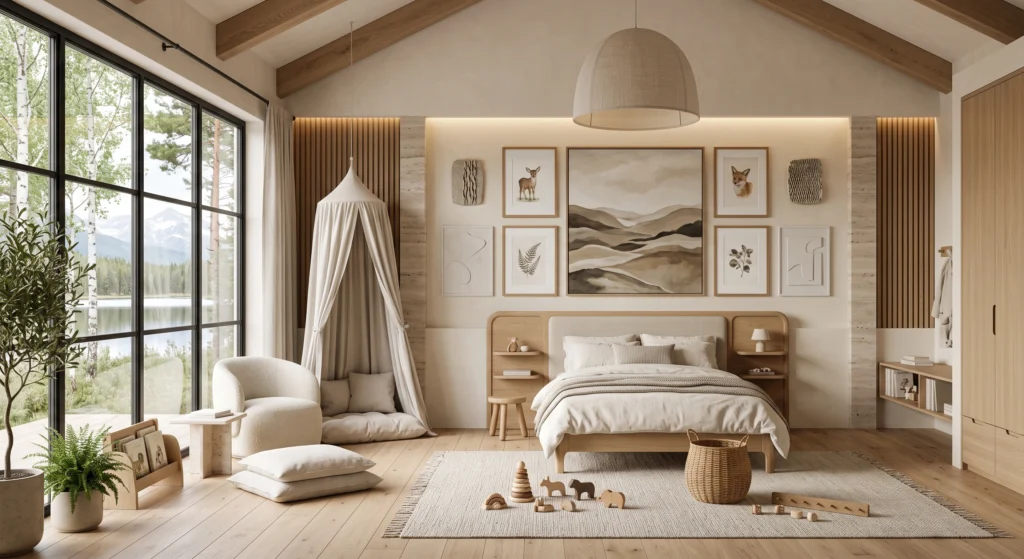
While the base is neutral, Scandinavian kids’ rooms aren’t boring. Add playful pops of color through accessories and textiles.
- Best colors: Muted sage green, dusty blue, warm terracotta, or soft mustard.
- Where to use: A colorful rug, bedding, artwork, or a single painted accent wall.
- Pro tip: Keep the color palette to 2-3 colors maximum to maintain a sense of calm.
A Scandi children’s room with muted color accents is playful without being overwhelming. It’s a space that feels calm and creative.
Tip: “A pop of sage green or dusty blue adds personality without overwhelming.”
3. Choose Safe, Natural Materials
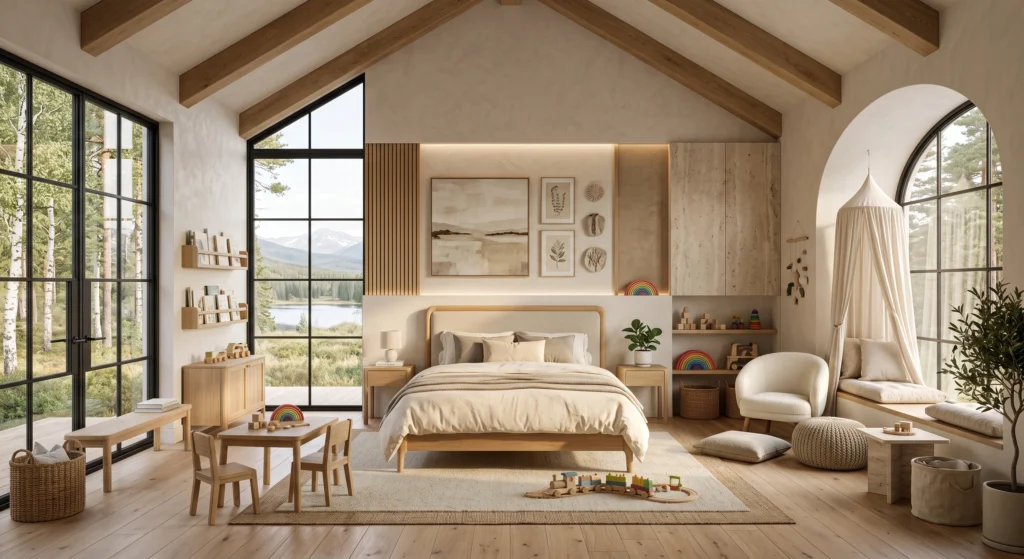
Safety is a top priority in any kids’ room. Scandinavian design favors natural, non-toxic materials that are safe for little ones.
- Furniture: Solid wood (oak, birch, or pine) with non-toxic finishes. Avoid particleboard or MDF.
- Textiles: Organic cotton, linen, or wool bedding and rugs. Avoid synthetic materials that can off-gas.
- Toys: Wooden toys, soft plush toys, and natural materials,no cheap plastic.
A safe kids room starts with the materials you choose. Natural materials are healthier for your child and better for the planet.
Tip: “Choose wood over plastic. Natural materials are safer, healthier, and more beautiful.”
4. Create a Playful Reading Nook or Tent
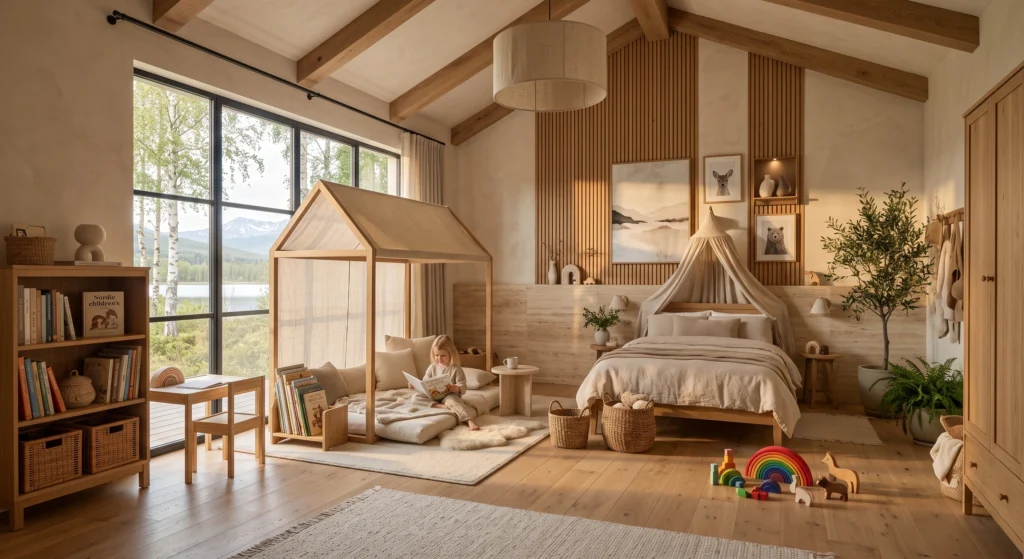
A cozy reading nook or play tent is a Scandinavian kids’ room classic. It’s a space where your child can retreat, read, or simply daydream.
- What to add: A simple teepee or canopy tent, a soft rug, a few cushions, and a basket of books.
- Where to place: In a corner of the room, under a window, or in a closet conversion.
- Why it works: A dedicated nook encourages independent play and a love of reading.
A Nordic kids room with a cozy nook is a space where imagination takes flight. It’s also a great way to use an otherwise unused corner.
Tip: “A teepee or canopy tent is a Scandinavian kids’ room essential. It’s a magical space for imagination.”
5. Use Multi-Functional Furniture (Grows with Them)
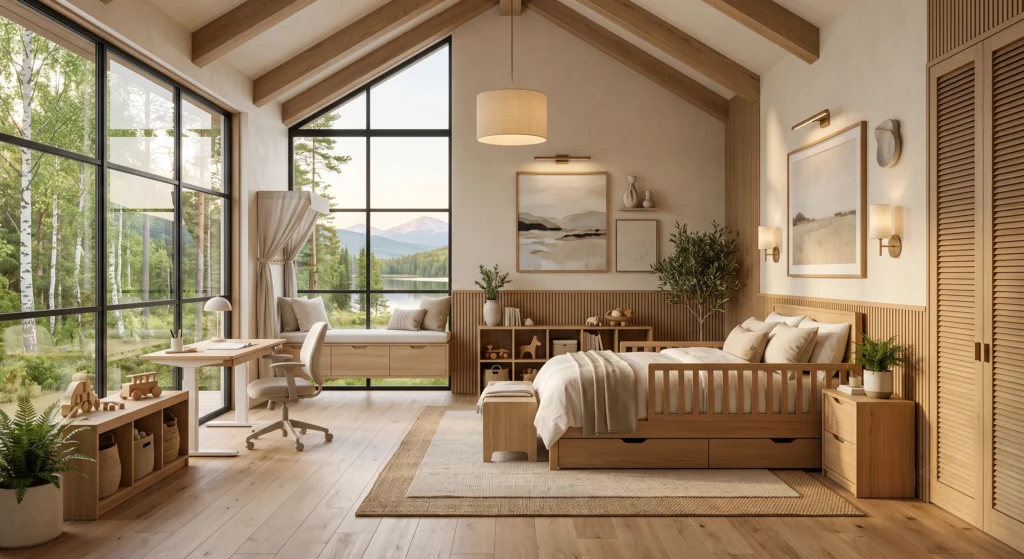
Children grow fast. Scandinavian kids’ rooms favor furniture that adapts to their changing needs.
- What to look for: A bed that converts from a toddler bed to a twin; a desk that adjusts in height; a storage bench that doubles as seating.
- Why it works: Multi-functional furniture saves space and money,you won’t need to replace it every few years.
- Pro tip: Choose pieces in neutral wood tones that work for any age.
A minimalist kids room with adaptable furniture is practical, sustainable, and beautifully Scandi.
Tip: “Choose furniture that grows with your child. One good piece lasts for years.”
6. Add Plenty of Storage (Hidden and Accessible)
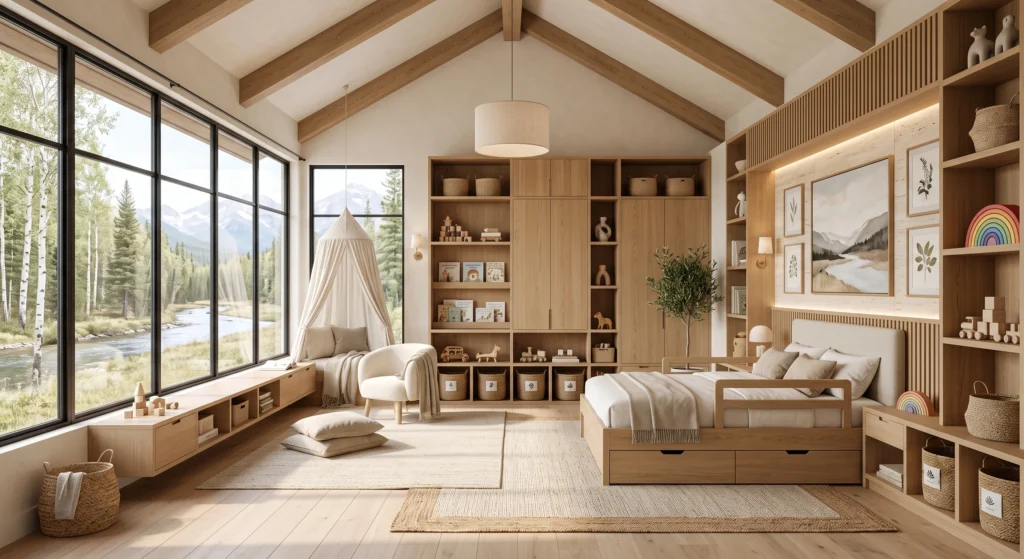
Kids have a lot of stuff. Smart storage is essential for keeping a Scandinavian kids’ room tidy and calm.
- What to add: Low, open shelving for books and toys; baskets or bins for smaller items; under-bed storage for out-of-season clothes.
- Why it works: When everything has a place, cleaning up becomes a breeze,and your child can access their things independently.
- Pro tip: Label baskets with pictures for younger children who can’t read yet.
A Scandi children’s room with clever storage makes tidying up a habit, not a battle.
Tip: “Low shelving and labeled baskets make tidying up easy for little hands.”
7. Keep It Minimal (The 30% Rule)
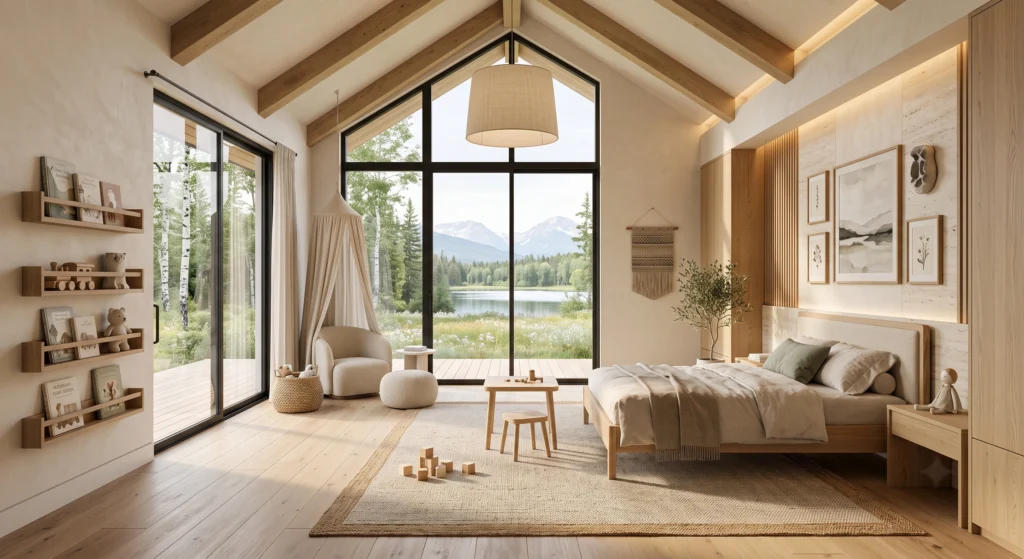
A cluttered room is overstimulating for children. Scandinavian kids’ rooms embrace minimalism.
- The 30% rule: After you’ve styled the room, remove 30% of the items. What remains will feel calm and intentional.
- What to keep: Only what your child uses and loves. Rotate toys seasonally to keep things fresh.
- Why it works: A minimal space reduces visual noise, supports focus, and makes cleaning easier.
A Nordic children’s room with less stuff feels more peaceful and functional. It’s a space where your child can breathe, play, and sleep.
Tip: “Less stuff means more space to play. Rotate toys and keep surfaces clear.”
8. Add Greenery (A Breath of Fresh Air)
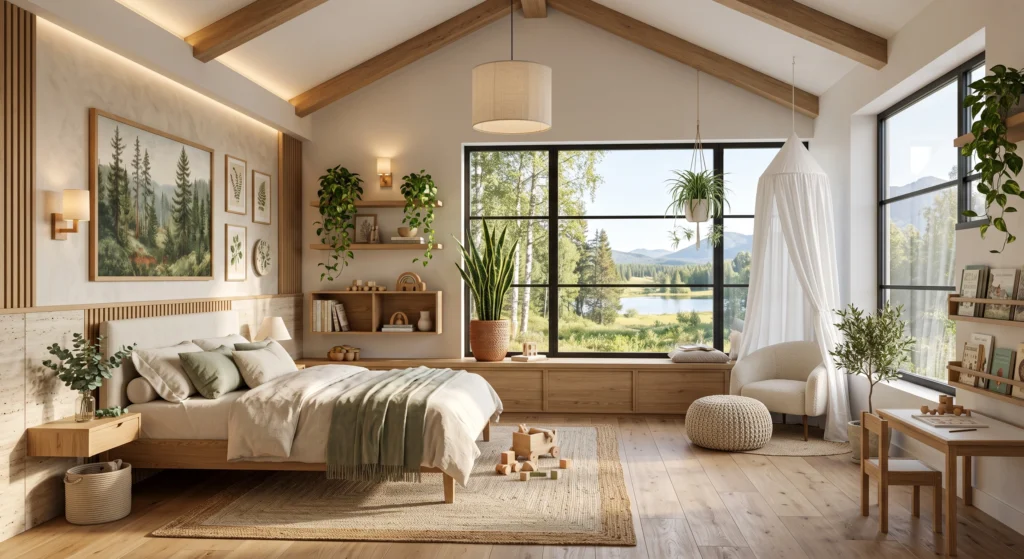
A plant in a kids’ room adds life, color, and a connection to nature. It also improves air quality.
- Best plants: Snake plant, spider plant, or pothos,all are easy to care for and non-toxic.
- Where to place: On a high shelf, a windowsill, or hanging in a corner (out of reach of little hands).
- Pro tip: Choose a plant with a simple, child-friendly pot,terracotta or ceramic.
A Scandi kids room with a plant is a space that feels alive and healthy. It’s a gentle introduction to caring for nature.
Tip: “A snake plant or pothos is safe, easy, and adds life to any kids’ room.”
9. Personalize with Meaningful Art
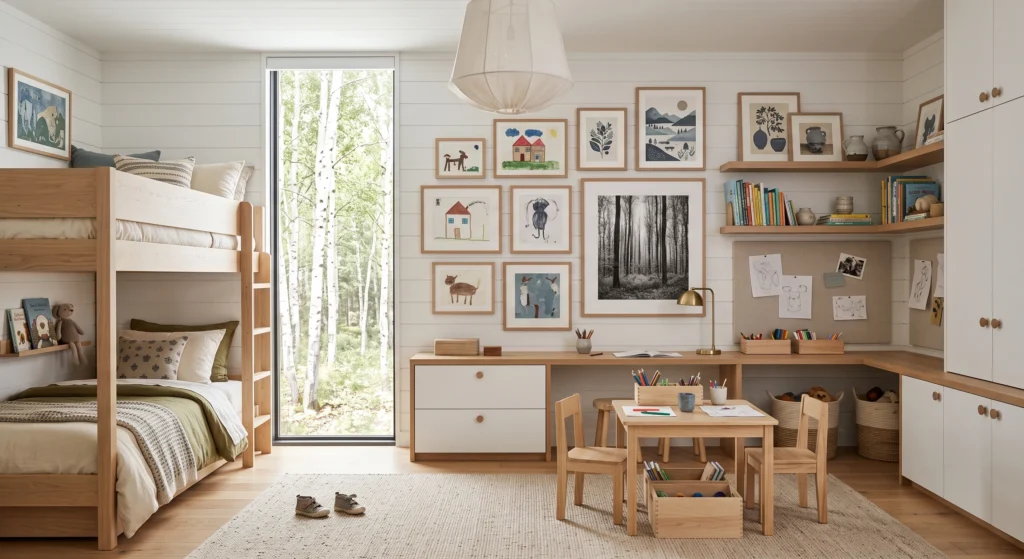
Kids’ rooms should feel like theirs. Add personalized touches that reflect their personality and interests.
- What to add: A framed piece of their own artwork, a favorite quote, or a simple print of an animal or nature scene.
- Where to place: At their eye level,they should be able to see and appreciate it.
- Pro tip: Rotate art seasonally or when they create something new they’re proud of.
A minimalist kids decor approach to art makes the room feel personal and special without being cluttered.
Tip: “Frame your child’s artwork and hang it at their eye level. It’s a simple way to make the room feel like theirs.”
BONUS: Scandinavian Kids Room Ideas by Age
For Babies (0-2 years):
- Keep it calm and minimal,neutral colors, soft textiles, and a comfortable nursing chair.
- A low, open shelf for a few books and a simple mobile above the crib.
For Toddlers (2-5 years):
- Add a low bed or floor bed (Montessori-style) for independence.
- A small table and chairs for drawing and play,their first workspace.
For School-Age Children (6+ years):
- A proper desk and chair for homework and creative projects.
- More storage for books, art supplies, and hobbies.
- More personalizatio ,let them choose a few decor items.
Table of Contents
Frequently Asked Questions
How do I create a Scandinavian kids’ room on a budget?
You don’t have to buy everything new. Start with neutral wall colors, choose a few quality wooden furniture pieces, and add affordable accessories like soft rugs, storage baskets, and simple wall art. As your child grows, you can easily update the room by changing bedding, cushions, and décor instead of replacing the furniture.
How can I keep a kids’ room tidy without constantly cleaning?
The secret is making storage easy for your child to use. Choose low shelves, labeled baskets, and furniture with built-in storage so toys and books have a dedicated place. Rotating toys every few weeks can also reduce clutter while making old favorites feel new again.
What furniture should I buy that will last as my child grows?
Look for furniture that adapts over time, such as convertible beds, adjustable desks, and sturdy wooden storage units. Choosing timeless, neutral designs means the furniture can continue to work from toddler years through the teenage years with only small décor updates.
Live lighter. Live Scandi.