


Warm neutral dining room styling inspired by Scandinavian design. Create a cozy, elegant space for family meals. Save this guide.
1. Start with a Neutral, Earthy Wall Color
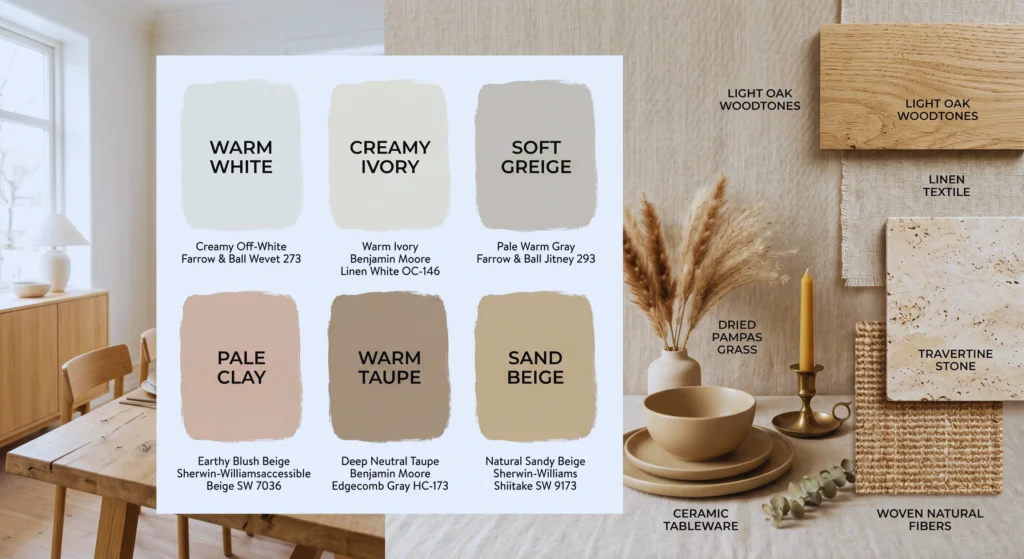
The foundation of warm neutral dining room styling is the wall color. Scandinavian design loves soft, muted backdrops that let furniture and textures shine.
- Best colors: Warm white (e.g., “White Dove”), soft greige (e.g., “Agreeable Gray”), or pale clay.
- Avoid: Stark white (feels cold) or dark bold colors (can feel heavy in a dining room).
Paint your walls a warm neutral, and suddenly the room feels larger, calmer, and more welcoming. This is the first step in scandinavian dining room design.
Tip: “Your dining room walls should hug the room, not shout at it. Warm neutrals are a hug.”
2. Choose a Solid Wood Dining Table (The Star of the Room)
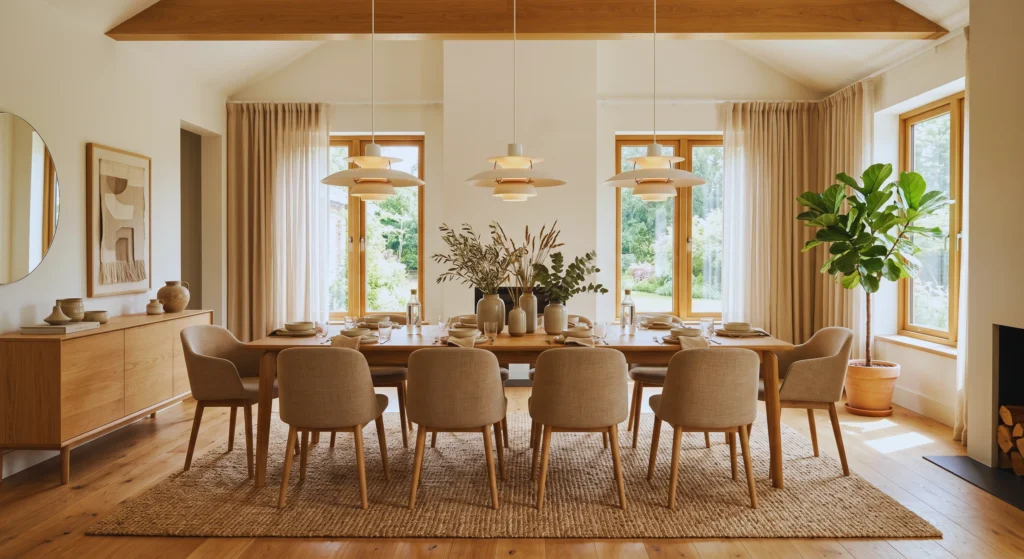
In Scandinavian homes, the dining table is the heart of the home. For warm neutral dining room styling, choose a table with visible wood grain and simple, tapered legs.
- Wood types: Light oak, ash, or walnut (warm undertones).
- Shape: Round or oval softens the room; rectangular fits narrow spaces.
- Finish: Matte or natural oil – no high-gloss lacquer.
A solid wood table adds warmth, texture, and a sense of permanence. It’s an investment piece that will last for decades.
Tip: “Your dining table should feel good to touch. Run your hand across it if it feels like real wood, you’ve chosen well.”
You Might Like:10 Scandinavian Dining Table Ideas for Every Home Style (From Rustic to Modern)
3. Layer Natural Textures on Chairs and Seating
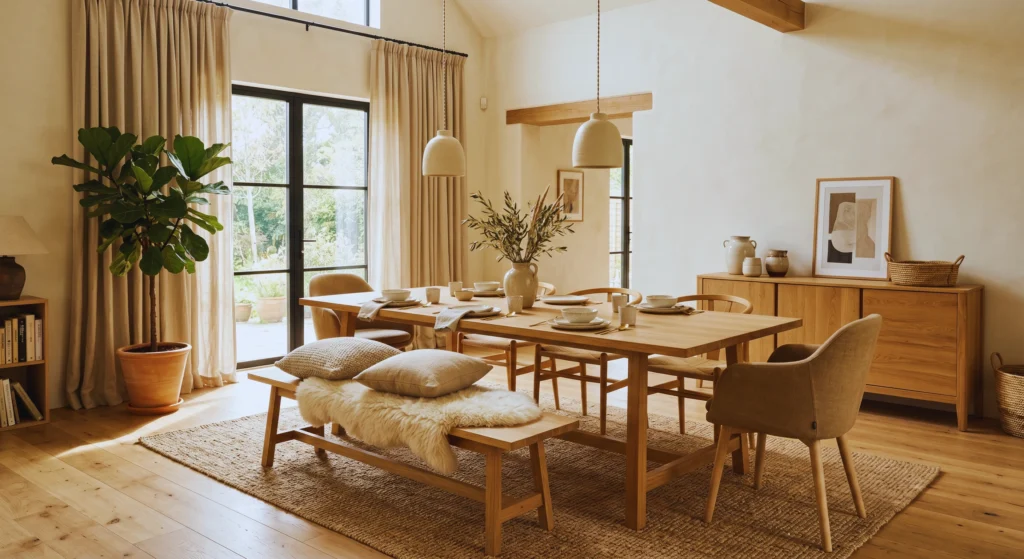
Hardwood chairs + hardwood table = too much wood. Balance is key in scandinavian dining room style.
- Chair options: Mixed materials 2 wooden chairs + 2 upholstered chairs, or all chairs with linen or wool seats.
- Bench: A wooden bench on one side adds casual coziness.
- Cushions: Add sheepskin or cotton seat pads for extra softness.
Textures absorb sound and make guests want to stay longer. No plastic or shiny faux leather.
Tip: “Every chair should invite you to sit for an hour. If it’s uncomfortable, add a cushion or replace it.”
4. Use a Jute or Wool Rug Underfoot
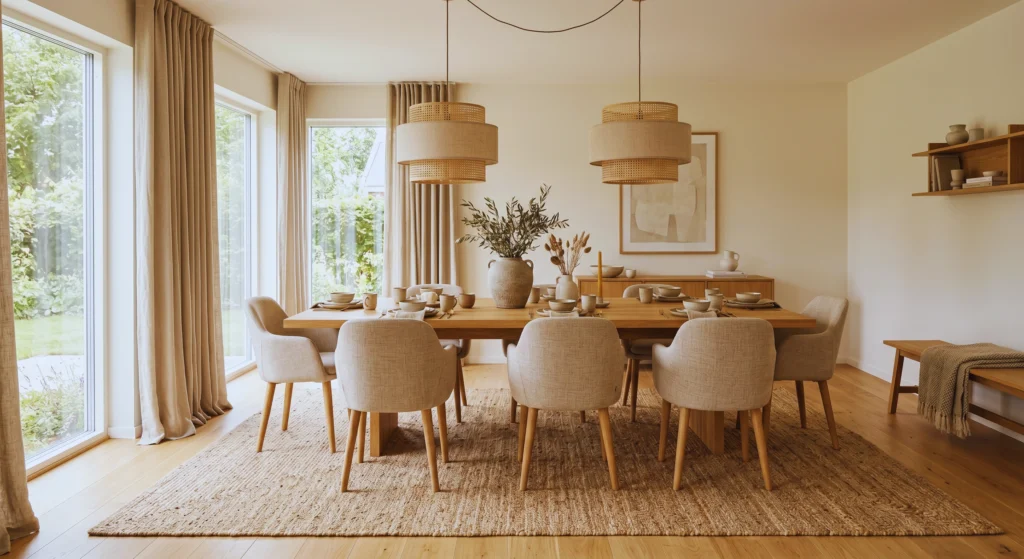
A rug anchors the dining room and adds softness. In warm neutral dining room styling, choose natural fibers.
- Best rugs: Jute, seagrass, or wool flat-weave in beige, cream, or light grey.
- Size: Large enough that chairs stay on the rug when pulled out (at least 24” beyond the table on all sides).
- Avoid: Synthetic rugs or dark colors that show every crumb.
A natural fiber rug warms up the room visually and acoustically. It also protects your floor.
Tip: “A rug under the dining table is like a warm blanket for the room. Just make sure it’s big enough.”
5. Hang a Simple, Statement Pendant Light
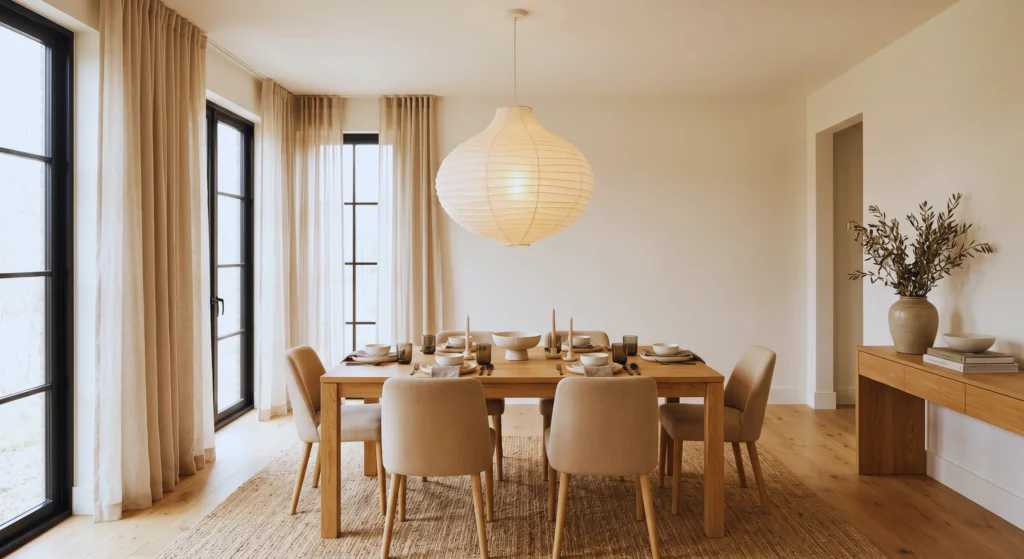
Lighting sets the mood for every meal. Harsh overhead lights ruin the ambiance. A single, beautiful pendant light is a hallmark of scandinavian dining room design.
- Style: Paper lantern, opal glass globe, or woven rattan pendant.
- Height: Hang 30–36 inches above the table surface.
- Bulb: Warm white (2700K) with a dimmer switch.
This light becomes a focal point. It also flatters food and faces. No chandeliers with crystals too fussy.
Tip: “Your dining pendant should be the jewelry of the room. Simple, elegant, and warm.”
6. Style a Minimalist Table Setting (Less Is More)
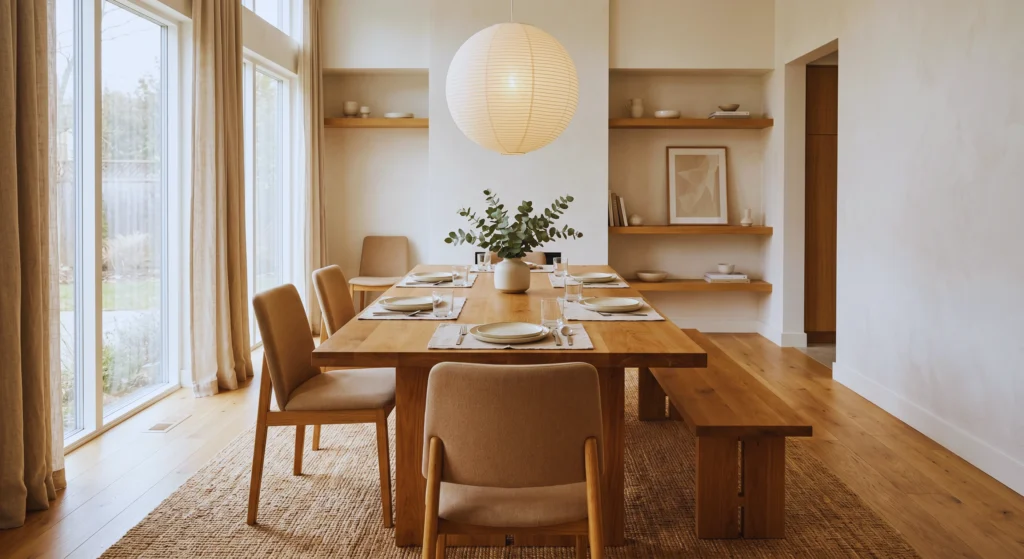
A cluttered table distracts from the food and the company. Minimalist table settings are clean, intentional, and beautiful.
- Everyday setting: One placemat or charger, one plate, one water glass, one set of flatware.
- Centerpiece: A single low vase with fresh or dried botanicals (eucalyptus, olive branches, or pampas grass).
- Avoid: Heavy tablecloths, multiple decorative bowls, or plastic flowers.
Leave empty space on the table. It feels luxurious, not bare.
Tip: “Empty space on a table is not wasted. It’s breathing room for conversation.”
7. Add Greenery or Dried Botanicals
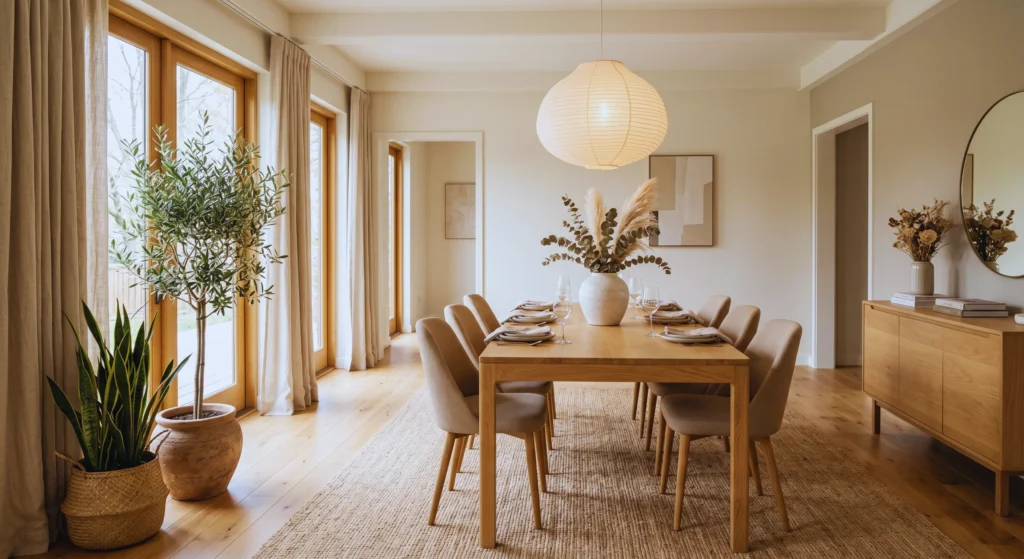
Plants bring life to a dining room. In warm neutral dining room styling, choose low-maintenance or dried options.
- Fresh plants: Snake plant, olive tree, or pothos (in a corner, not on the table).
- Dried botanicals: Eucalyptus, lavender, or wheat stalks in a ceramic vase.
- Placement: A small vase as a centerpiece, a larger plant in the corner.
Dried botanicals last months and require zero watering. Perfect for busy hosts.
Tip: “A single branch in a clay vase is more beautiful than a dozen fake flowers. Let nature do the work.”
8. Use Open Shelving for Intentional Display
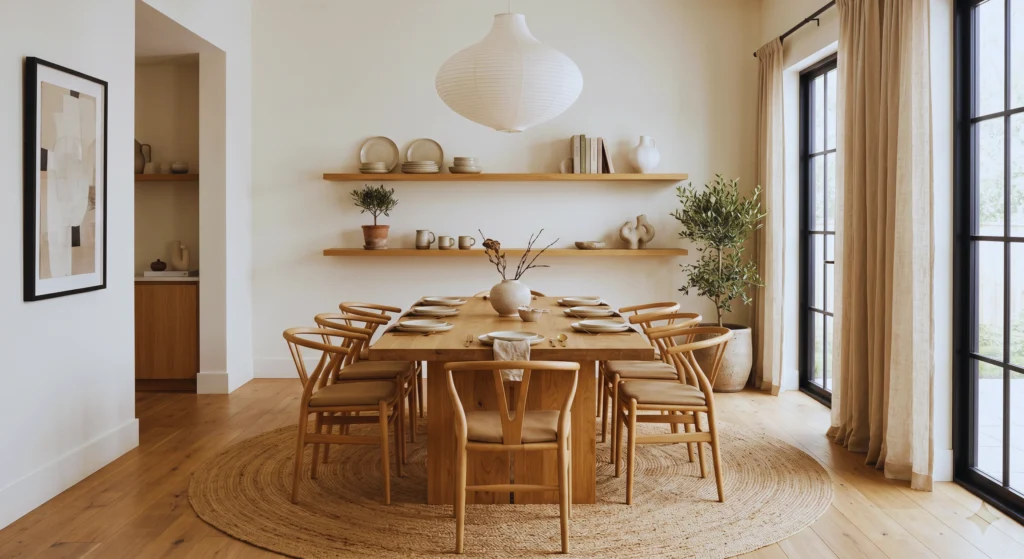
If you have a sideboard or floating shelves, use them to display a few curated pieces. Scandinavian dining room style loves open storage but only if it’s intentional.
- What to display: A stack of neutral plates, a ceramic bowl, a cookbook, a small plant.
- The 30% rule: After you style a shelf, remove 30% of the items.
- Hide: Everyday dishes, plastic containers, and clutter behind cabinet doors.
Open shelving forces you to edit. That’s a good thing.
Tip: “Open shelves are not for storage. They’re for art you can eat off.”
9. Add Warmth with Candles (Lots of Them)
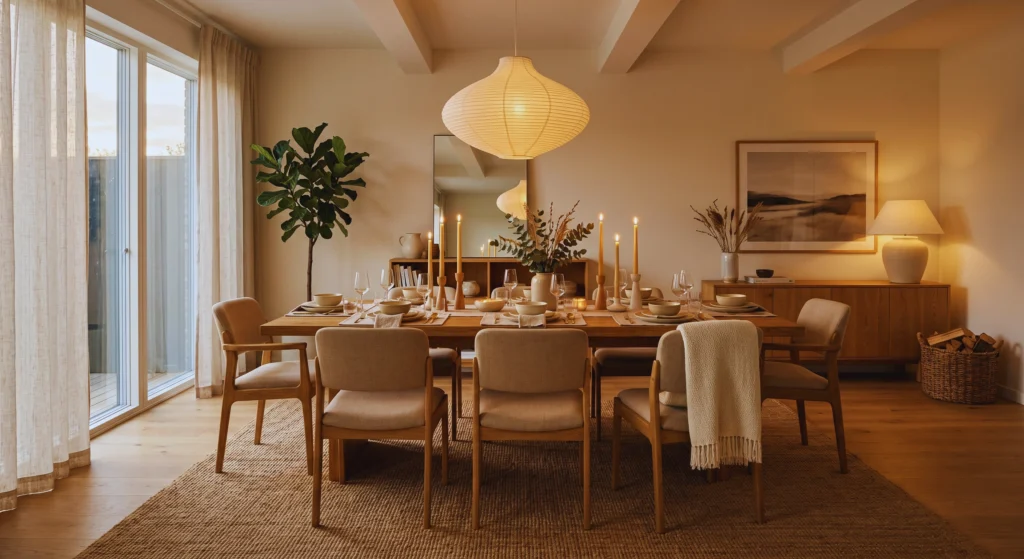
Candles are non-negotiable in Scandinavian homes. They create hygge that cozy, intimate feeling.
- Placement: A cluster of 3 – 5 taper candles in a wooden holder as a centerpiece.
- Varying heights: Use candlesticks of different heights for visual interest.
- Safety: Use LED flameless candles if you prefer (warm white, not flickering too fast).
Even for breakfast, a single candle changes the energy. Try it for one week.
Tip: “A dining room without candles is just a room with a table. Add flame, add magic.”
10. Keep It Clutter-Free (The One-Tray Rule)
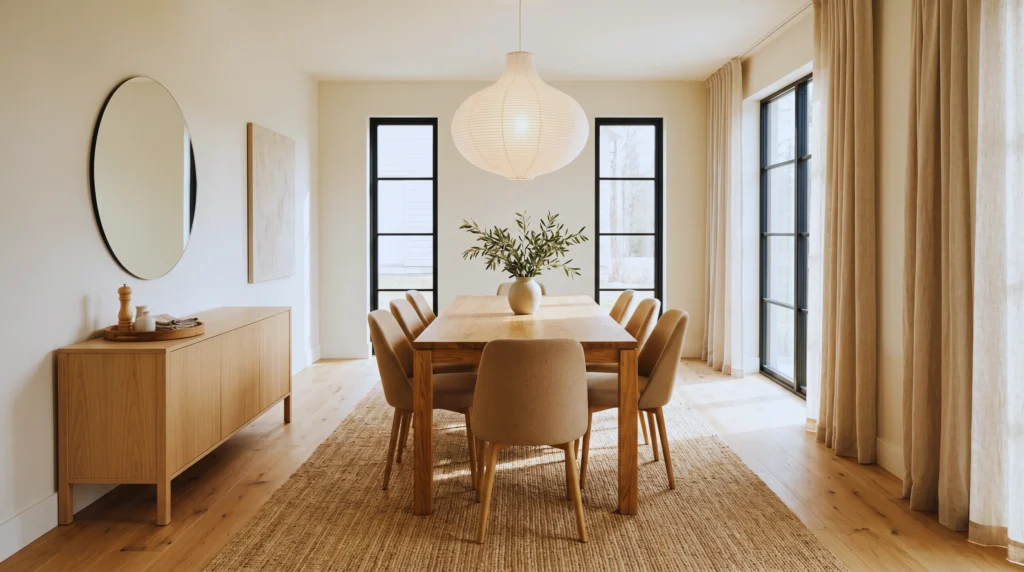
A dining room accumulates clutter: mail, keys, homework, water bottles. Fight back with one simple rule.
- The one-tray rule: Use a single wooden or ceramic tray on the sideboard or table to corral daily items (keys, mail, sunglasses).
- Everything else: Put away after each meal.
A clutter-free dining room feels calm and luxurious. It also makes cleaning faster.
Tip: “If you can’t clear your dining table in 60 seconds, you have too much stuff.”
Table of Contents
Frequently Asked Questions
How can I decorate my dining table without making it look cluttered?
Keep your centerpiece simple. A ceramic vase with fresh or dried greenery, a few candles, or a wooden tray is usually enough. Scandinavian design focuses on quality over quantity, so leaving plenty of empty space on the table helps the room feel elegant, calm, and ready for everyday use.
How do I make my dining room feel warm without using dark colors?
You don’t need dark paint to create a cozy dining room. Choose warm neutrals like creamy white, greige, beige, or soft clay, then layer natural wood, linen, wool, and jute textures. Warm lighting and candles will also make the space feel inviting while keeping the bright, airy Scandinavian look.
How do I create a cozy Scandinavian dining room on a budget?
Start with affordable updates instead of replacing everything. Paint the walls in a warm neutral color, add linen seat cushions, style your table with candles and a ceramic vase, introduce a jute rug, and decorate with a few plants or dried botanicals. These small changes can completely transform your dining room into a cozy Scandinavian-inspired space without a major renovation.
Live lighter. Live Scandi.