

Scandinavian vases & ceramics for minimal home styling organic shapes, matte textures, and earthy tones. Transform your space. Save this guide.
1. The Sculptural Organic Vase (Art That Holds Flowers)
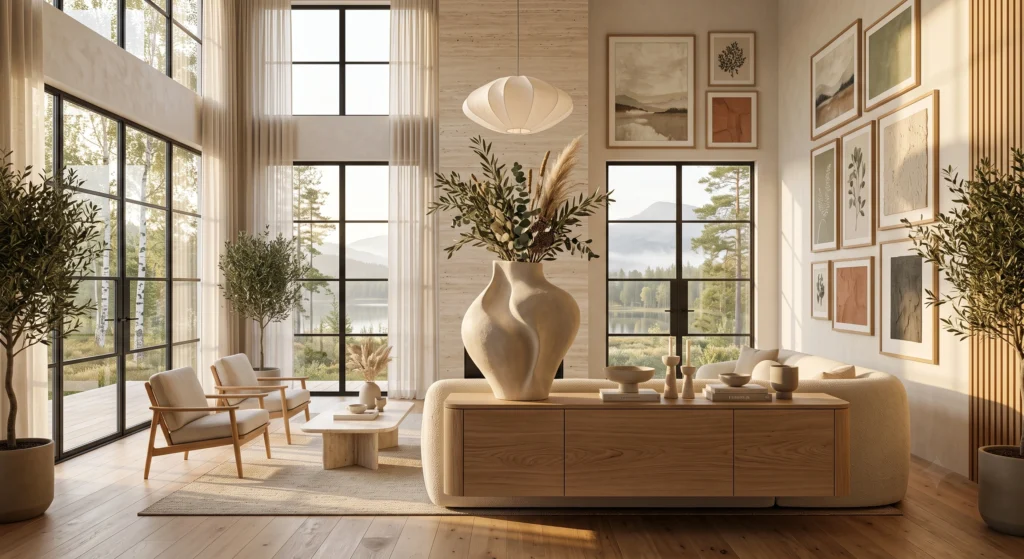
Organic, fluid silhouettes are the defining trend in Scandinavian ceramics for 2026. These vases are more than functional objects they’re sculptural art that happens to hold flowers.
- What to look for: Vases with asymmetrical shapes, flowing edges, and soft, rounded bodies.
- Where to place: On a console table, mantel, or as a standalone piece on a shelf.
- Why it works: The organic form softens sleek, minimalist furniture and adds visual interest without clutter.
A sculptural vase transforms the ordinary into the extraordinary. It’s the centerpiece that makes your minimalist ceramic decor feel intentional and curated.
Tip: “Choose one organic vase per spot and let it breathe. In Scandinavian living, empty space isn’t a ‘lack’ , it’s part of the design.”
You Might Like: 10 Scandinavian Wood Stain Colors for Furniture & Floors (The Ultimate 2026 Guide to Nordic Hues)
2. The Matte Ceramic Vessel (Texture Without Clutter)
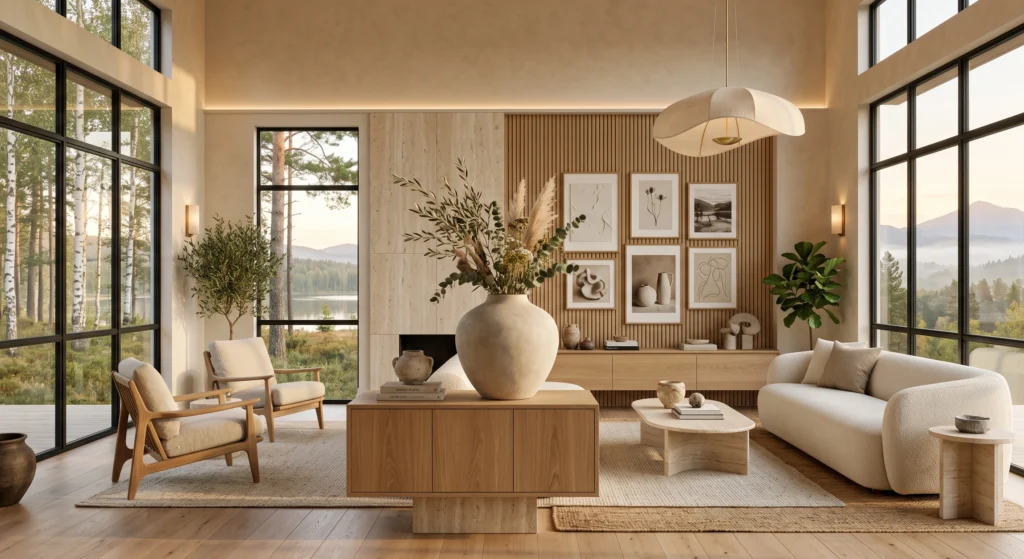
In 2026, material experience matters more than ever. Tactile surfaces add depth without extra color or busy prints.
- What to look for: Matte ceramic or stoneware vases with a soft, handcrafted feel.
- Where to place: On open shelving, a sideboard, or a windowsill.
- Why it works: Matte finishes feel calming and sophisticated, making them perfect for Scandi pottery that blends seamlessly with neutral interiors.
A matte ceramic vessel doesn’t compete it connects. It’s the quiet connector that ties your whole room together.
Tip: “If you already have a chunky knit throw and a sisal rug, choose a matte ceramic vase that connects rather than competes.”
3. The Warm Neutral Palette (Sand, Clay, and Chalk)
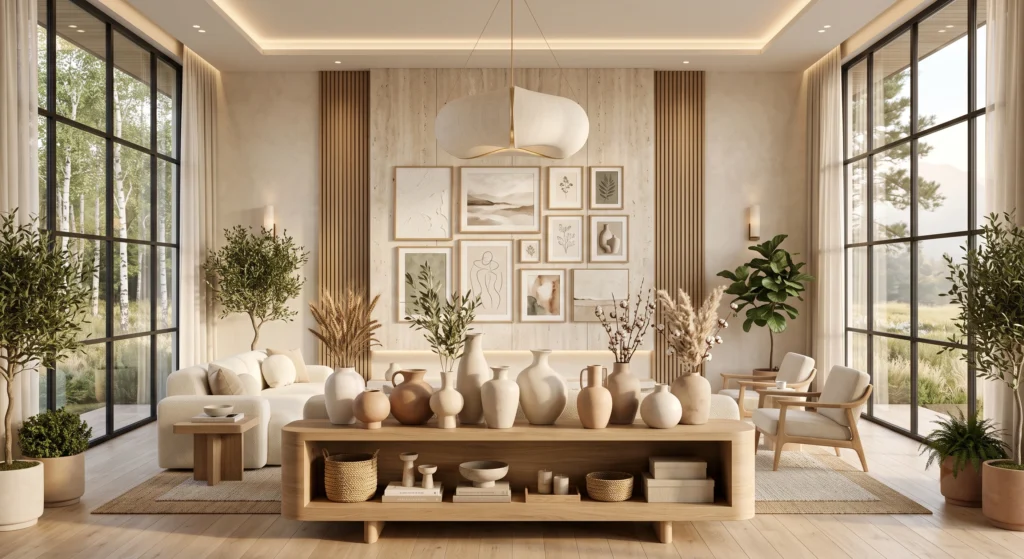
Scandinavian interiors are moving away from cool whites toward warm, earthy neutrals.
- Colors to look for: Chalky white, sand, clay, taupe, and soft clay tones.
- Where to use: As your base color for vases and ceramics throughout your home.
- Why it works: Warm neutrals create a timeless, inviting atmosphere that feels both modern and cozy.
A sand-colored vase on an oak table, with dried flowers in wheat and oat tones, creates a perfectly calm Nordic vase styling moment.
Tip: “Choose ton-sur-ton a sand-colored vase on an oak table, with dried flowers in wheat and oat tones. It’s effortlessly Scandi.”
4. The Statement Vase as a Focal Point
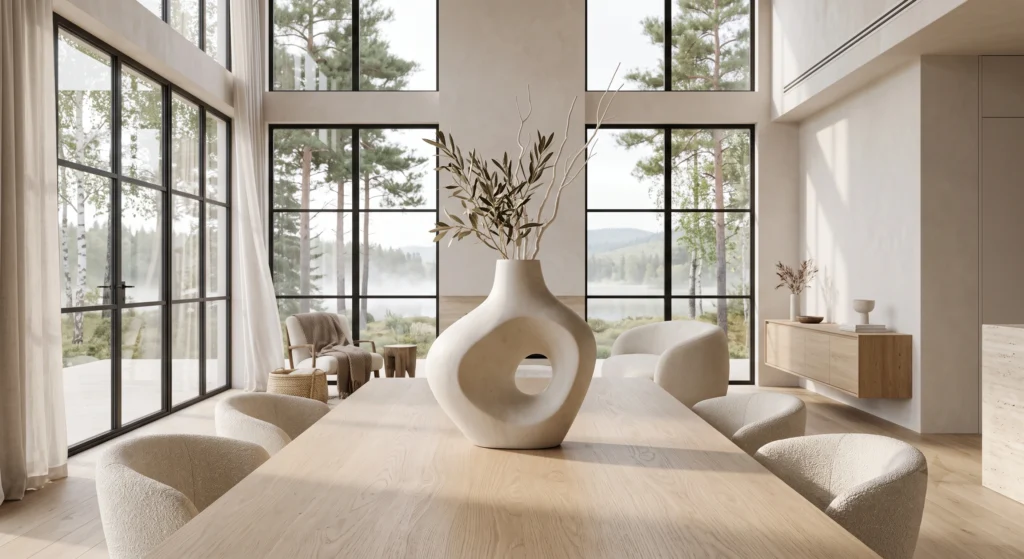
One of the nicest styling principles is: make one choice stand out clearly.
- What to look for: A vase with a clear, sculptural shape not necessarily large, but unmistakably intentional.
- Where to place: As a anchor point on a dining table, sideboard, or mantel.
- Why it works: A statement vase reduces the need for multiple accessories, keeping your space calm and focused.
A single, beautiful vase can anchor an entire room. It’s the definition of minimalist ceramic decor at its most powerful.
Tip: “A statement vase doesn’t have to be large, but it should have a clear shape. That gives a room an anchor point.”
5. The Japandi Ceramic (Where Japanese Meets Nordic)
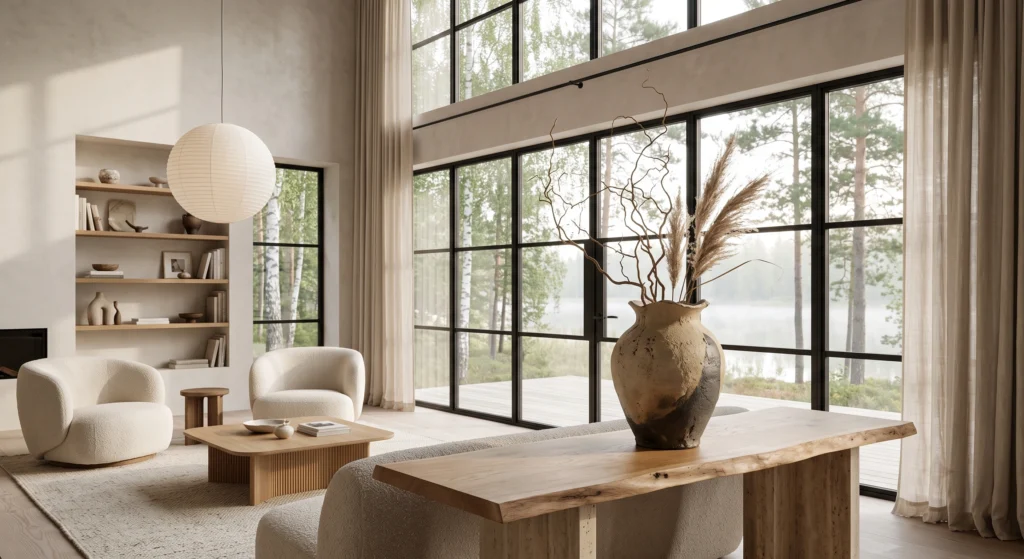
Japandi style the blend of Japanese wabi-sabi and Scandinavian simplicity is a perfect match for ceramic vases.
- What to look for: Vases with imperfect, organic forms that celebrate natural materials and understated beauty.
- Where to place: In entryways, living rooms, or any space that needs a calm, grounding presence.
- Why it works: Ceramic vases embody the perfect marriage of form, imperfection, and function.
A Japandi-inspired ceramic piece embodies the Scandi pottery ethos – quiet, thoughtful, and deeply connected to nature.
Tip: “Japandi ceramics celebrate imperfection. Look for organic shapes and natural glazes they’re wabi-sabi in clay form.”
6. The Speckled or Textured Glaze (Handcrafted Charm)
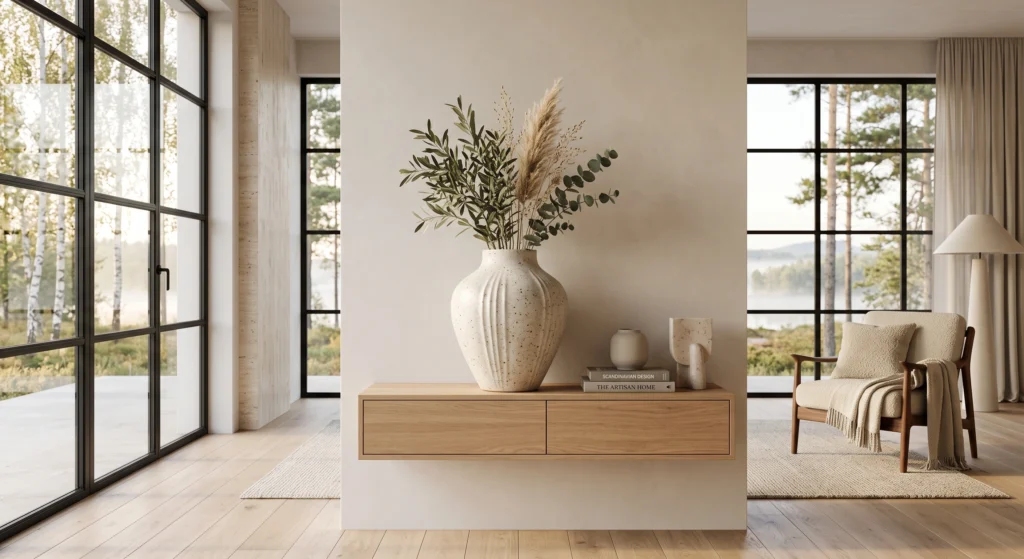
Handcrafted ceramics with speckled glazes or organic textures are adding a beautiful, artistic touch to minimalist interiors.
- What to look for: Ceramics with textured ivory speckled glazes, ribbed surfaces, or reactive finishes.
- Where to place: On a console with layered ceramics and books for a curated vignette.
- Why it works: The texture adds richness and a handcrafted feel that celebrates artisan craftsmanship.
A speckled glaze adds tactile richness and a handcrafted feel, creating a serene, natural accent for any Nordic vase styling scheme.
Tip: “A vase with a textured, speckled glaze is like a piece of art for your shelf. It’s beautiful with flowers or completely on its own.”
7. The Tonal Trio (Three Vases, One Look)
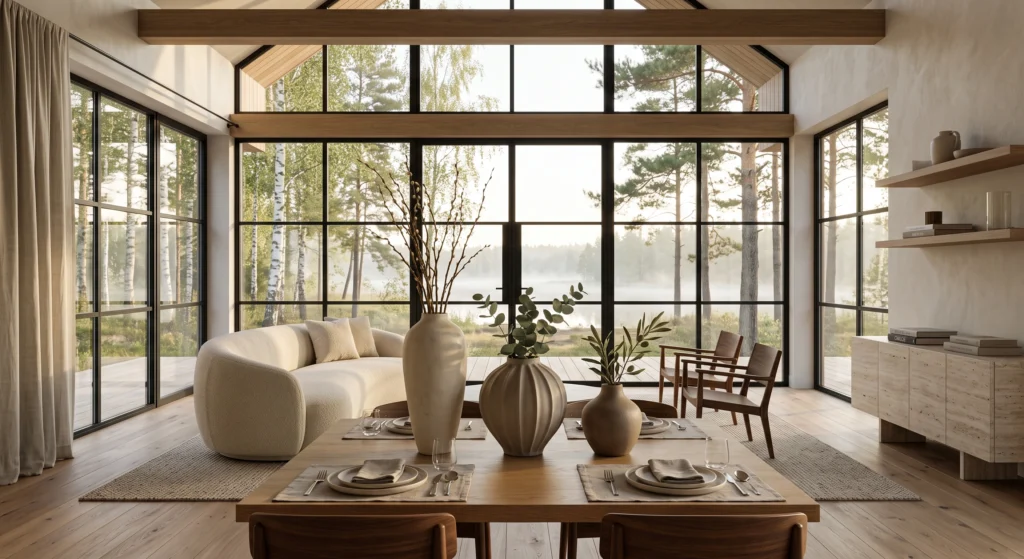
Grouping three matte ceramic vases in graduated heights creates a sophisticated vignette that feels balanced yet dynamic.
- What to look for: A set of three vases in earthy tones with matte finishes and varied silhouettes.
- Where to place: On a dining table, console, or open shelving.
- Why it works: The tonal variation and varied heights create visual rhythm without overwhelming the space.
A Scandi pottery trio is the ultimate styling shortcut. It looks curated, intentional, and effortlessly beautiful.
Tip: “Three vases in graduated heights create a sophisticated vignette that feels balanced yet dynamic. It’s the Scandi styling cheat code.”
8. The Empty Vase as Sculpture (Flowers Optional)
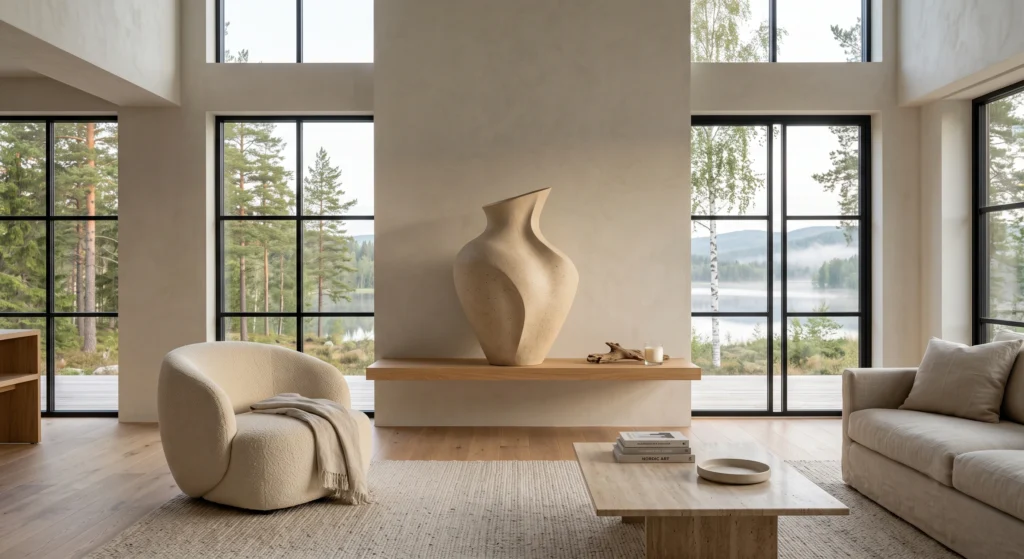
In Scandinavian interiors, a vase doesn’t always need flowers. Sometimes, the empty form is the statement.
- What to look for: A vase with a beautiful silhouette that stands strong on its own.
- Where to place: On a mantel, shelf, or window ledge no flowers needed.
- Why it works: The empty vase becomes a sculptural object, celebrating the beauty of form and material.
A vase can be purely decorative. It’s the ultimate minimalist ceramic decor beautiful in its simplicity.
Tip: “Keep one vase empty on purpose. Treat it like sculpture it’s strong enough to stand alone.”
9. The Ceramic Candle Vessel (Warmth and Function)
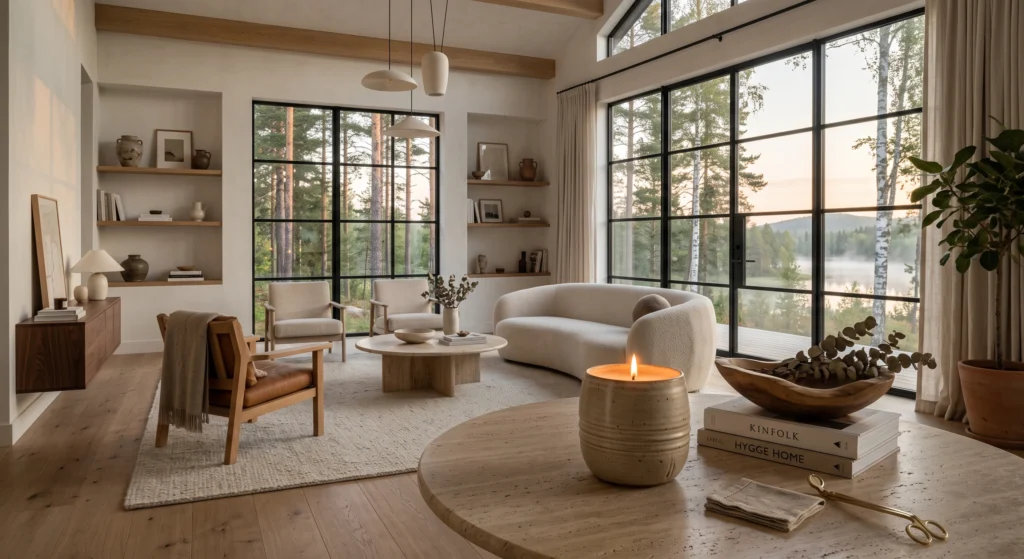
In 2026, Scandinavian candle vessels are getting earthier – think handmade ceramic with soft ridges or matte finishes.
- What to look for: Ceramic vessels that double as candle holders, in natural tones like sand, clay, and stone.
- Where to place: On coffee tables, side tables, or as part of a tablescape.
- Why it works: The vessel becomes part of the decor something tactile and grounding.
A ceramic candle vessel combines warmth, function, and style. It’s the perfect Scandi pottery accent for any room.
Tip: “The vessel becomes part of the decor – something tactile and grounding. Choose handmade ceramic for that Nordic touch.”
10. The Layered Ceramic Display (Mix and Match)
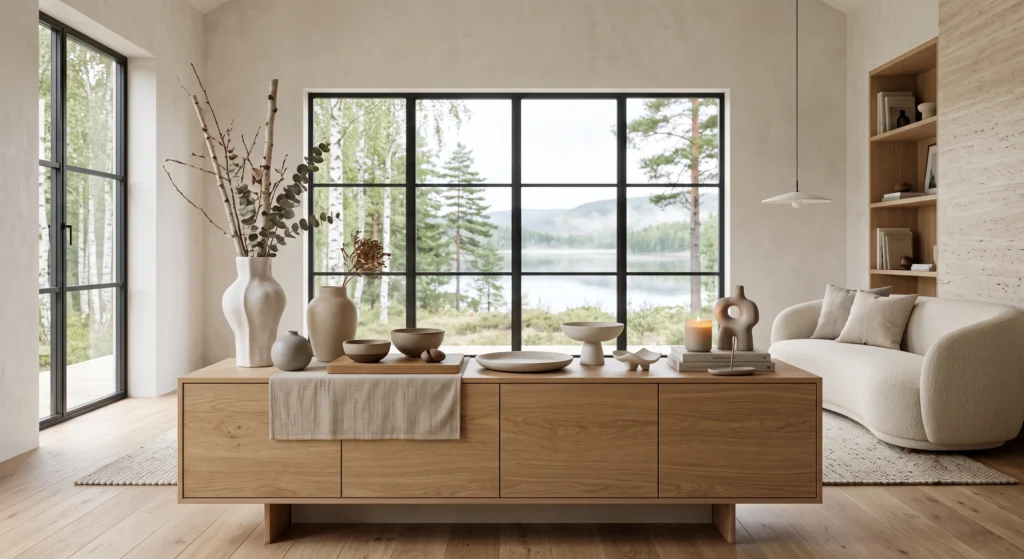
For a curated, lived-in look, layer multiple ceramic pieces together with other natural materials.
- How to style: Combine a small clay vase with a linen textile or wooden tray to build depth textures interplay beautifully.
- What to include: A mix of vases, bowls, and plates in complementary tones and textures.
- Where to place: On open shelving, sideboards, or as part of a tablescape.
Layering ceramics creates a rich, inviting display that feels personal and intentional. It’s the essence of Nordic vase styling.
Tip: “Combine a small clay vase with a linen textile and a wooden tray. The textures interplay beautifully – that’s pure Scandi.”
BONUS: Top Scandinavian Ceramic Brands to Know
- 101 Copenhagen – Sculptural, organic vases and tables with a Japandi influence.
- Muuto – Clean lines and functional forms, perfect for open shelving displays.
- HAY – Minimal yet playful ceramic pieces in subtle tones.
- ferm LIVING – Simple vases with soft curves and tactile finishes.
- Iittala – While famous for glass, their ceramic collections echo Nordic simplicity and craftsmanship.
- Normann Copenhagen – Circular minimalism and tactile finishes.
Table of Contents
Live lighter. Live Scandi.



Pingback: 9 Japandi Scandinavian Living Room Ideas for 2026 – The Ultimate Blend of Zen & Hygge - Scandi Simplicity
Pingback: 7 Scandinavian Living Room with TV Wall Ideas That Hide the Screen, Not the Style - Scandi Simplicity